
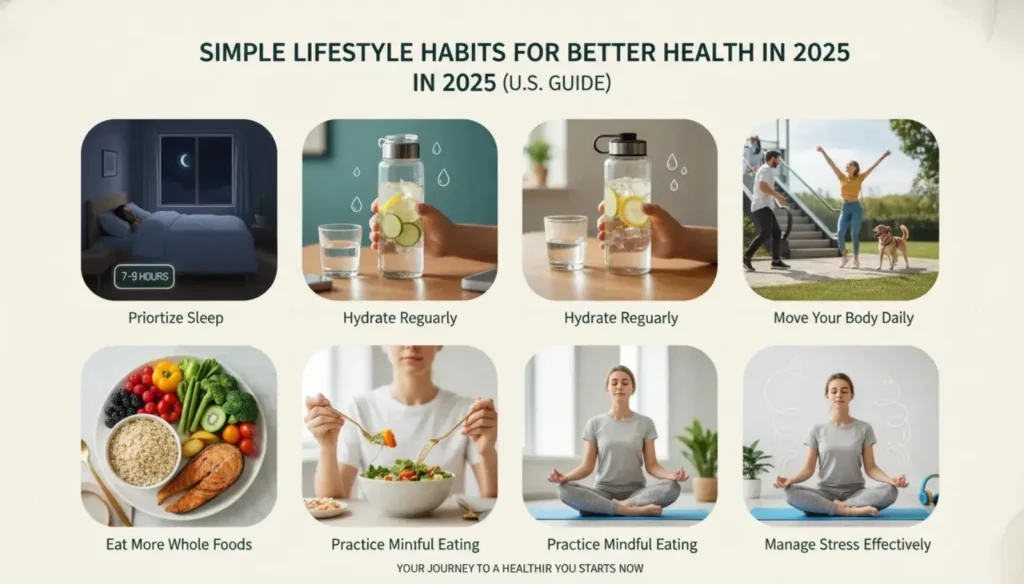
If you want better health in 2025, the biggest wins come from small, consistent habits—not extreme routines. U.S. health experts, including the CDC and NIH, all point to the same idea: simple daily choices build long-term wellness. Here’s a clear, easy breakdown of the habits that matter most this year. Improving your lifestyle doesn’t always require major changes. Many Americans are focusing on small, daily habits that support better health, reduce stress, and improve overall wellbeing. In 2025, medical experts and lifestyle coaches agree that simple routines can make a big difference when practiced consistently.
Here are easy, practical lifestyle habits Americans can follow every day.
Key Points
- Small habits = long-term results
- Daily routines support mental health
- Affordable solutions work best
- Exercise doesn’t need to be intense
- Focus on consistency, not perfection
Nutrition & Hydration: Keep It Simple, Keep It Consistent
- Eat more whole foods. Focus your meals around fruits, vegetables, whole grains, beans, nuts, and lean proteins. The fewer “ultra-processed” foods in your day, the better your energy, digestion, and overall health.
- Add protein to every meal. It keeps you full, balances blood sugar, and supports muscle health. Good picks: chicken, fish, yogurt, eggs, beans, tofu, nuts.
- Drink more water. A reusable bottle helps you stay hydrated throughout the day. Aim for at least eight cups daily (more if you’re active or in hot weather). Cutting sugary drinks alone can make a big difference for your health.
- Practice mindful eating. Slow down, enjoy your food, and avoid eating while scrolling or watching TV. You’ll naturally eat less and feel more satisfied.
Movement & Activity: Small Steps Count the Most
- Move your body daily. The goal is at least 150 minutes of moderate activity per week—walking, dancing, biking, or anything that gets your heart rate up.
- Add 1,000 extra steps a day. This simple habit is one of the easiest ways to boost heart health. Park farther away, take the stairs, or walk during phone calls.
- Break up long sitting sessions. Stand, stretch, or walk for a minute every 30–60 minutes. Even if you work out, long periods of sitting are harmful.
- Build strength twice a week. Use weights, bodyweight exercises, or resistance bands. Strong muscles protect your joints, improve balance, and support metabolism.
Sleep & Mental Well-Being: Your Foundation for Good Health
- Aim for 7–9 hours of sleep. Keep a consistent sleep-wake schedule and avoid screens before bed. A cool, dark, quiet room helps your body relax faster.
- Manage stress intentionally. Meditation, breathing exercises, yoga, journaling, short walks, or even 5 quiet minutes can reset your stress levels.
- Stay connected. Strong social relationships—family, friends, community, volunteering—boost mental and physical health. Make time for people who energize you.
Preventive Care & Other Healthy Habits
- Quit smoking. Still one of the most impactful health decisions you can make.
- Limit alcohol intake. If you choose to drink, keep it moderate.
- Stay up-to-date with checkups. Routine medical, dental, and eye exams catch problems early when they’re easiest to treat.
- Start with one or two small habits, build slowly, and stay consistent. These simple changes—done daily—create long-lasting results throughout 2025 and beyond.
Daily Habits That Improve Health

Drink Enough Water
Hydration supports energy, digestion, and skin health. Most adults should aim for at least 6–8 glasses of water daily.
Add More Fruits and Vegetables
Americans are learning simple ways to add nutrition, like:
- fruit in breakfast
- vegetables with dinner
- healthy snacks
- smoothies
Looking for easy snack ideas? Explore Healthy Snacks Americans Love for budget-friendly and nutritious options.
Take Short Walks
Walking 20–30 minutes per day supports heart health, improves mood, and increases daily physical activity without needing a gym.
Practice Stress Reduction
Simple practices help reduce anxiety and improve focus, including:
- breathing exercises
- taking breaks
- mindfulness apps
- journaling
Explore how daily movement improves mental wellness in our Reduce Stress and Mental Health guide.
Get Better Sleep
Consistent sleep routines help:
- energy levels
- mood balance
- immune system
- brain function
Experts recommend 7–9 hours per night.
Reduce Screen Time
Digital fatigue is increasing across the United States. Limiting unnecessary screen time helps with sleep and mental wellbeing.
Discover more everyday wellness tips inside our Lifestyle Category.
Why Small Habits Matter
Small lifestyle changes are easier to maintain than extreme diets or intense workout plans. When practiced daily, simple routines can improve health over time and support long-term wellbeing.
Final Takeaway
Healthy living in 2025 doesn’t require complicated rules. By drinking water, walking, sleeping well, and eating healthier meals, Americans can live better with easy and affordable habits.
Want a global perspective on healthy eating trends? Check out Globlevide for lifestyle inspiration beyond the U.S.
FAQs
