
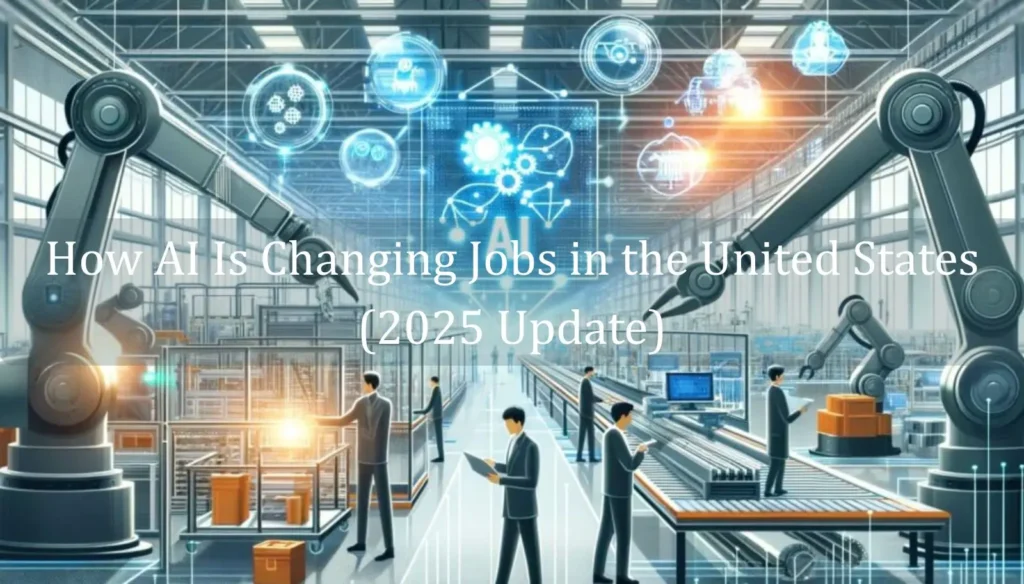
In 2025, Artificial Intelligence (AI) is having a major impact on the U.S. job market. Instead of causing widespread unemployment, experts say AI is reshaping the kinds of jobs Americans do—automating routine tasks, reducing certain entry-level roles, and creating new opportunities in fast-growing tech fields. Artificial intelligence is transforming workplaces across America, creating new opportunities while also raising concerns about job security and future employment. As more companies adopt automation, AI tools, and digital work systems, millions of workers are asking what this means for their careers in 2025 and beyond.
AI is not only replacing some tasks—it is also creating new kinds of jobs that did not exist a few years ago. Understanding these changes can help workers prepare for the future job market in the United States. The overall trend is a shift in how work gets done, not a sudden loss of jobs.
Key Points
- AI automates routine tasks
- New tech and data jobs are growing
- Some industries may lose more jobs than others
- Training and reskilling are important
- Workers with digital skills will benefit most
Key Shifts in the U.S. Labor Market
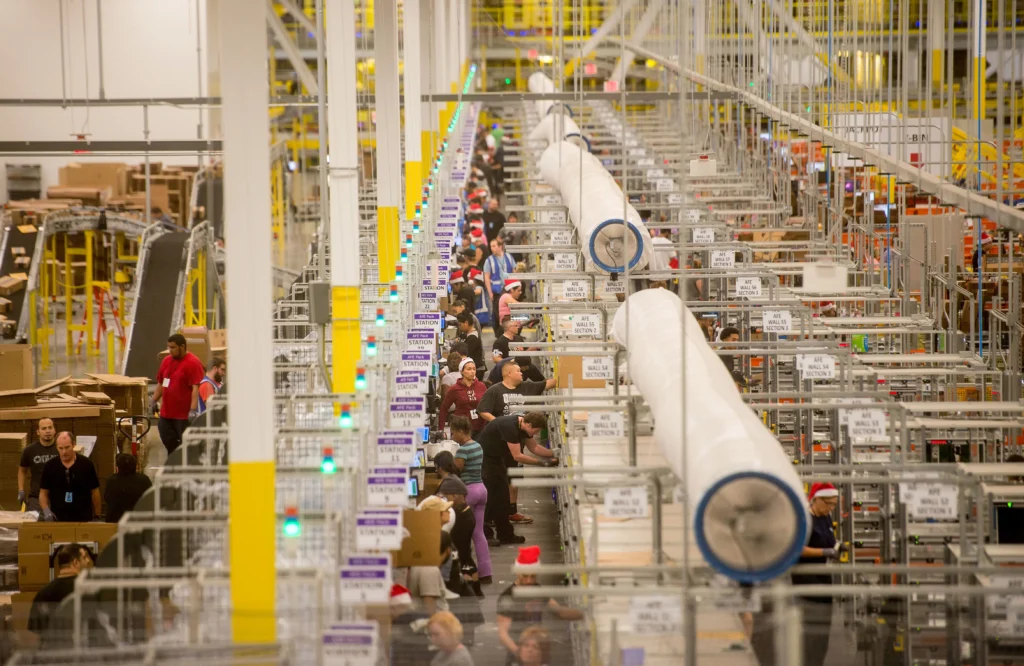
Automation of Routine Tasks
AI tools are increasingly handling repetitive work such as data entry, call-center support, and basic administrative tasks. This helps companies operate more efficiently but reduces demand for traditional entry-level positions.
Fewer Entry-Level Roles
Because AI can perform work that used to be assigned to junior workers, it’s becoming harder for new graduates to enter fields like tech, finance, and administration. This means early-career professionals need stronger skills from day one.
Growth of New Careers
AI is creating high-demand jobs including:
- AI engineers
- data scientists
- machine learning specialists
- AI ethics and safety roles
- AI system trainers
- human-machine collaboration managers
These careers often come with higher salaries but also require specialized skills.
Job Transformation
In many professions, AI is acting as a support tool rather than a replacement. For example, financial analysts now spend less time collecting data and more time on strategic decision-making with AI assistance.
Skills Gap
U.S. companies are prioritizing:
- technical skills such as Python, cloud computing, and data analysis
- human skills including creativity, critical thinking, communication, emotional intelligence, and leadership
These human-centered abilities are becoming even more valuable as AI expands.
Industries Most Affected
| Industry | Jobs at High Risk (Examples) | Emerging/Growing Roles (Examples) |
|---|---|---|
| Technology | Entry-level software engineers, junior data analysts | AI engineers, data engineers, cybersecurity professionals |
| Finance | Accountants/bookkeepers, credit analysts, administrative assistants | Financial analysts (using AI tools for strategic analysis) |
| Customer Service | Call center agents, telemarketers, receptionists | Human agents for complex issues and customer relationship management |
| Healthcare | Medical transcriptionists, administrative roles | Nurse practitioners, surgeons (assisted by robotics/AI), AI diagnostic specialists |
| Retail | Cashiers, sales representatives, warehouse workers | E-commerce specialists, automated systems managers |
Technology
AI is writing code and automating software tasks, shifting developers toward oversight and strategy roles.
Finance
Accounting and bookkeeping tasks are becoming automated, while analytical and advisory positions are growing.
Customer Service
Chatbots are replacing basic support roles, while human agents handle more complex issues.
Healthcare
AI supports diagnostics and administration, but patient-focused roles like nurses, doctors, and specialists continue to grow.
Manufacturing & Retail
Automation affects cashiers and warehouse staff, while new jobs appear in robotics, logistics, and digital operations.
Preparing for the AI-Driven Workforce
Experts recommend:
- lifelong learning
- developing human-centered skills
- building AI literacy
- staying adaptable
- learning skills that complement AI, not compete with it
Simply put, workers who combine technology skills with human abilities will be best positioned in the future job market.
Key Trends for 2025
Transformation, Not Replacement
AI is shifting work responsibilities more than eliminating jobs entirely.
Pressure on Young Workers
Entry-level white-collar roles are being automated, making the first step of a career more competitive.
New Jobs Created
The World Economic Forum estimates nearly 97 million new AI-related jobs could appear globally by 2025.
Productivity Gains
Economists expect AI to boost productivity, with Goldman Sachs projecting up to 1.8% annual labor productivity growth over the next decade.
Uneven Adoption
Large companies are adopting AI more quickly than smaller businesses, and cities are adopting faster than rural areas—potentially widening digital skill gaps across regions.
AI is reshaping U.S. jobs, not eliminating them. While entry-level roles are shrinking, new careers and specialized positions are growing rapidly. Americans who combine technical skills with uniquely human abilities—like problem-solving, creativity, and emotional intelligence—will be best positioned as AI continues transforming the workplace.
How AI Is Changing Everyday Work
AI tools can perform many tasks faster and more accurately than humans, including data entry, scheduling, customer service, and certain financial tasks. While this can improve productivity, it also raises concerns about job replacement in some industries.
Jobs Most Affected
Industries experiencing the biggest changes include:
- retail
- manufacturing
- finance
- transportation
- customer service
In many companies, AI tools assist workers instead of replacing them. However, some roles involving routine tasks may decline over time.
New Jobs AI Is Creating
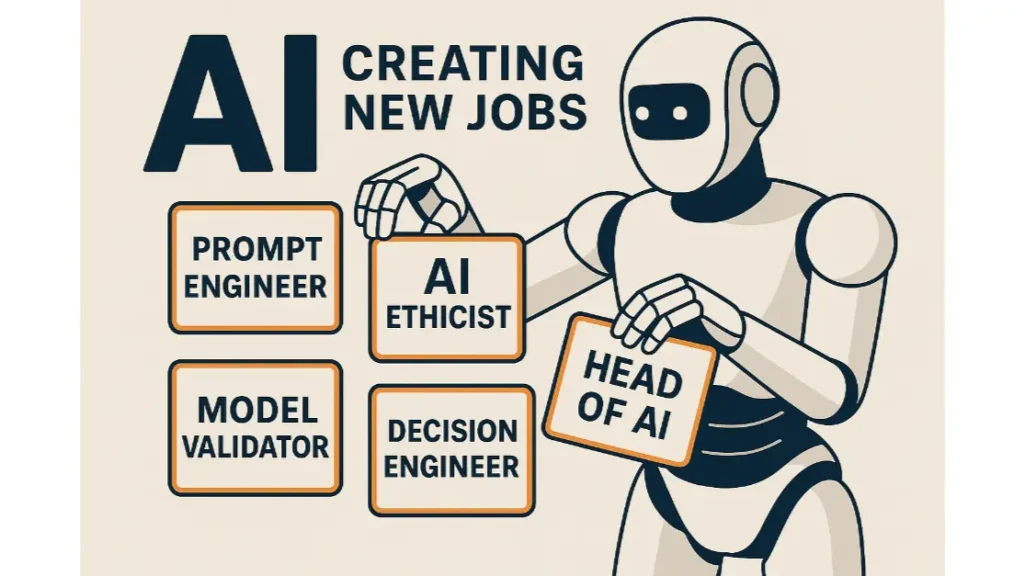
While some jobs are disappearing, new careers are growing. These include:
- AI support specialists
- data analysts
- software engineers
- cybersecurity experts
- digital learning specialists
Many companies now need employees who understand AI, automation tools, and data systems.
Training and Reskilling Matter
Experts say workers should focus on skills such as:
- digital literacy
- data analysis
- software tools
- cybersecurity awareness
Americans who learn digital and technical skills will be more competitive in the future job market.
Will AI Replace Human Jobs Completely?
Most researchers believe AI will change how people work rather than remove all human jobs. Human decision-making, creativity, and emotional intelligence are still essential in many careers, including healthcare, education, and management.
AI and Job Growth in America
AI may help create new industries and expand opportunities in technology, healthcare, engineering, energy, and digital services. These growing sectors may offset some job losses from automation.
Final Outlook
AI will continue changing the job market in the United States, but it also creates opportunities for workers who learn new skills. The future workplace will likely combine human ability with advanced technology, leading to more specialized and digital-focused careers.
FAQs

Pingback: What Is RapidNative? AI App Builder for React Native