
What is a K-beauty skincare routine for beginners?
A K-beauty skincare routine for beginners is a simple, step-by-step system from South Korea that focuses on hydration and skin barrier health. Start with 5 core steps: double cleanse, toner, serum, moisturizer, and SPF. You do not need all 10 steps right away. Most beginners see visible improvement in 4 to 6 weeks with consistent daily use. K-beauty products work for all skin types and cost far less than most Western luxury skincare.
Key Takeaways
- The K-beauty market in the US hit $27.5 billion in 2024, growing at 9% per year (Credence Research, 2025).
- Ulta Beauty reported a 38% rise in Korean skincare sales in Q1 2025, the fastest-growing segment in their beauty category.
- Beginners start with 5 steps, not 10. The full 10-step routine is optional and built up over time.
- The most important step is sunscreen, applied every single morning, indoors or outdoors.
- Consistency matters more than the number of products. Most people see results within 4 to 6 weeks.
- You can build a full beginner K-beauty routine for $30 to $50 using products available on Amazon, Ulta, and CVS.
What Is K-Beauty and Why Are Americans Obsessed With It?
K-beauty stands for Korean beauty. It is a skincare philosophy from South Korea built around prevention, hydration, and protecting your skin barrier rather than correcting problems after they appear.
The difference from Western skincare is simple. Western routines often use strong active ingredients to treat existing problems fast. K-beauty uses gentle, layered products to keep skin healthy so those problems never start.
Here is why the US market has taken notice:
- Korean cosmetics rank number 1 in US imports, ahead of every other country (Korea Customs Service, 2025).
- US K-beauty sales rose 53% year-over-year in Q1 2025 alone.
- The US is on track to overtake China as the world’s largest K-beauty market by mid-2026 (Euromonitor).
- Ulta, Sephora, Walmart, and Amazon all expanded their Korean skincare sections in 2024 and 2025.
The appeal is practical. K-beauty products work for every skin type. They are gentle enough for sensitive skin. Most are affordable. And the results, dewy, clear, smooth skin, are visible without needing expensive treatments.
The global K-beauty market was valued at $16.26 billion in 2025 and is projected to reach $38.29 billion by 2033, growing at 11.3% per year (Market Data Forecast, 2025). That growth reflects real consumer results, not just marketing.
The 5-Step K-Beauty Beginner Routine
You do not need 10 steps to start. Experts and dermatologists agree: begin with 5 core steps. These cover everything your skin needs to stay clean, hydrated, and protected.
The correct order matters. Apply products from thinnest to thickest texture. This lets each layer absorb properly before the next one seals it in.
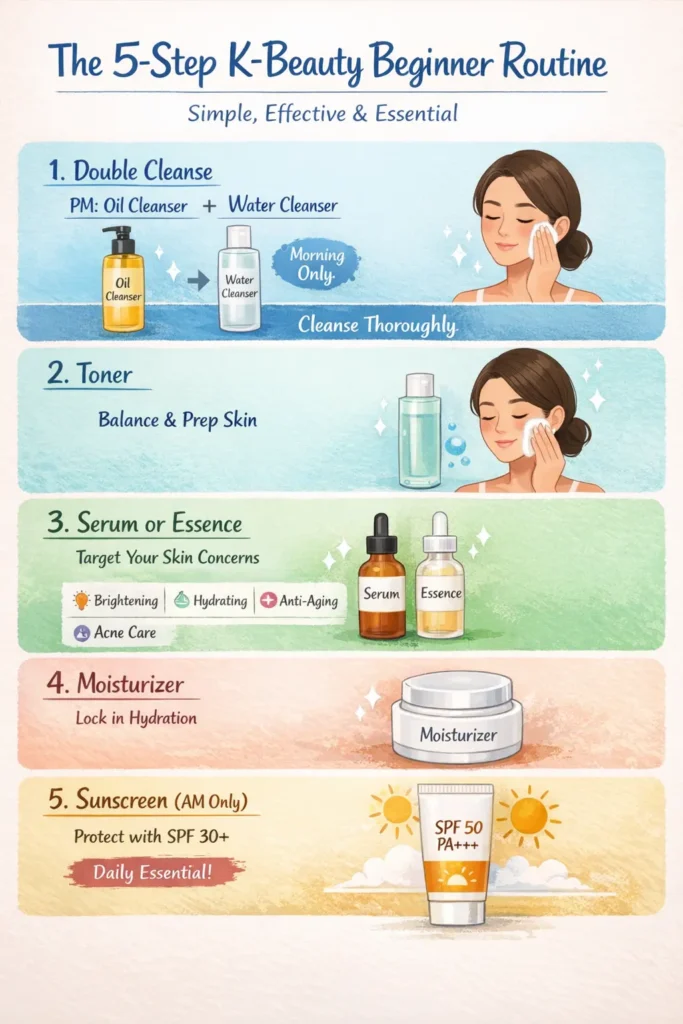
Step 1: Double Cleanse (Morning: Water Cleanser Only / Night: Both Steps)
Double cleansing is the foundation of K-beauty. At night, use an oil-based cleanser first to dissolve makeup, sunscreen, and excess oil. Follow with a water-based cleanser to remove sweat, dirt, and any remaining residue. In the morning, use the water-based cleanser alone.
Why it works: Oil-based cleansers remove what water cannot. Water-based cleansers remove what oil leaves behind. Together, they clean without stripping your natural oils or damaging your skin barrier.
- Oil cleanser: massage into dry skin for 60 seconds, add water to emulsify, then rinse.
- Water cleanser: wet your face, apply a small amount, massage for 30 to 60 seconds, rinse with lukewarm water.
- Never use hot water. It strips your skin barrier and causes redness.
- Pat dry with a clean towel. Do not rub.
Step 2: Toner
Korean toners are not like Western toners. They do not strip your skin. They are lightweight, watery liquids that balance your skin’s pH after cleansing and prepare it to absorb the products that follow.
Think of your skin like a sponge. A damp sponge absorbs water faster than a dry one. Toner gets your skin into that damp, receptive state.
- Pour a small amount onto clean hands and pat gently into your face and neck.
- Or apply with a cotton pad using light upward strokes.
- Look for ingredients like hyaluronic acid, glycerin, centella asiatica, or niacinamide.
- Avoid toners with alcohol, strong fragrances, or astringents, especially if your skin is sensitive.
Step 3: Serum or Essence
This is where you target specific concerns. Serums are thicker with concentrated active ingredients. Essences are lighter and focus on hydration and cell turnover. Beginners often start with an essence first before adding a targeted serum.
Choose based on what your skin actually needs:
- Dullness or uneven tone: vitamin C serum or niacinamide essence
- Dryness or dehydration: hyaluronic acid serum or snail mucin essence
- Acne and breakouts: BHA serum or centella asiatica essence
- Anti-aging: peptide serum or fermented ingredient essence
Apply a few drops and pat gently into skin. Do not rub.
Step 4: Moisturizer
Moisturizer seals in all the hydration from the steps before it. Without this step, the toner and serum evaporate instead of absorbing into your skin.
- Oily skin: use a lightweight gel or gel-cream formula.
- Dry skin: use a richer cream with ceramides or squalane.
- Combination skin: use a gel-cream and apply heavier cream only to dry areas.
- Sensitive skin: look for fragrance-free formulas with centella or panthenol.
Apply an even layer over your face and neck. Massage gently until absorbed.
Step 5: Sunscreen (Morning Routine Only, Non-Negotiable)
Sunscreen is the most important step in any skincare routine, K-beauty or otherwise. UV damage is the leading cause of premature aging. It also causes pigmentation, dullness, and worsens acne scarring.
Korean sunscreens are different from most Western formulas. They use SPF filters not approved in the US, giving them a lighter, more cosmetically elegant texture. Beauty of Joseon’s Relief Sun SPF 50 is a top example, available at Ulta for $10.
- Apply SPF 30 or higher as the final step of your morning routine.
- Use two finger-lengths of product for full face and neck coverage.
- Reapply every two hours if you are outdoors.
- Apply every day, even indoors. UV rays come through windows.
Dermatologist tip: “Skipping sunscreen is the fastest way to age your skin. Apply it daily, rain or shine. Your future self will thank you.” Dr. Debra Jaliman, MD, board-certified dermatologist (Parade, 2026).
Looking for an Affordable Skincare Routine that fits your budget? We’ve got tips for creating a hydration-focused routine without the hefty price tag!
Best Beginner K-Beauty Products to Buy in the US Right Now
Every product below is available on Amazon, Ulta, Sephora, or CVS. All prices are as of March 2026.
| Product | Price | Step | Why It Works |
|---|---|---|---|
| COSRX Low pH Good Morning Gel Cleanser | ~$10 | Cleanser | pH-balanced, removes impurities without stripping the barrier |
| Banila Co Clean It Zero Cleansing Balm | ~$18 | Oil Cleanser | Melts makeup and SPF instantly, rinses clean with no residue |
| Some By Mi AHA BHA PHA 30 Days Miracle Toner | ~$17 | Toner | Gentle acids balance pH and clear pores without irritation |
| COSRX Advanced Snail 96 Mucin Essence | ~$22 | Essence | A bottle sells every 25 seconds globally. Repairs and hydrates intensely. |
| Klairs Freshly Juiced Vitamin C Serum | ~$20 | Serum | 5% vitamin C brightens and evens tone without oxidizing like other C serums |
| Dr. Jart+ Ceramidin Cream | ~$30 | Moisturizer | Ceramide-rich formula for dry or sensitive skin, dermatologist-recommended |
| Beauty of Joseon Relief Sun SPF 50+ | ~$10 | Sunscreen | Watery texture, zero white cast, tinted option available. A top dermatologist pick. |
| Laneige Water Sleeping Mask | ~$25 | Night Mask | Optional extra step, adds intense hydration overnight when skin repairs itself |
Total cost for a full 5-step beginner routine: $65 to $85 for your first order. Each product lasts 2 to 3 months with daily use, bringing the monthly cost to $25 to $35.
How to Build Your Routine Based on Your Skin Type
K-beauty works for everyone, but the products you choose depend on your skin type. Here is a quick guide to customizing each step.
Oily Skin
- Cleanser: foam or gel formula that removes excess sebum without over-stripping.
- Toner: look for niacinamide (reduces oil production) or BHA (salicylic acid) to clear pores.
- Serum: COSRX BHA Blackhead Power Liquid is a top pick for oily, acne-prone skin.
- Moisturizer: lightweight gel, such as COSRX Oil-Free Ultra Moisturizing Lotion.
- Sunscreen: gel or fluid SPF, not cream-based, to avoid a greasy finish.
Dry Skin
- Double cleanse every night without skipping. Dry skin still produces oil and needs thorough cleansing.
- Toner: use a hydrating toner with hyaluronic acid or glycerin. Apply while skin is still slightly damp.
- Essence: snail mucin or hyaluronic acid essence adds deep hydration that dry skin needs.
- Moisturizer: use a rich cream with ceramides, squalane, or shea butter. Dr. Jart+ Ceramidin Cream or Laneige Water Bank Cream are strong choices.
- Bonus step: add a sleeping mask 2 to 3 nights a week for extra overnight hydration.
Combination Skin
- Cleanse your T-zone (forehead, nose, chin) more thoroughly than your cheeks.
- Apply a lightweight moisturizer all over, then add a heavier cream only to dry patches.
- Use a balancing toner with centella asiatica or green tea to calm both oily and dry areas.
Sensitive Skin
- Stick to fragrance-free, alcohol-free products across every step.
- Introduce one new product at a time, waiting at least one week before adding another.
- Patch test every new product on your inner arm for 24 hours before applying to your face.
- Look for centella asiatica, panthenol, madecassoside, and ceramides. These ingredients calm and repair reactive skin.
This comfort-first approach mirrors what we’ve explored in Morning Skincare Routines That Support Skin Balance, where consistency matters more than complexity.
5 Mistakes Beginners Make With K-Beauty (And How to Fix Them)
Most beginners fail for the same reasons. Here is what to avoid.
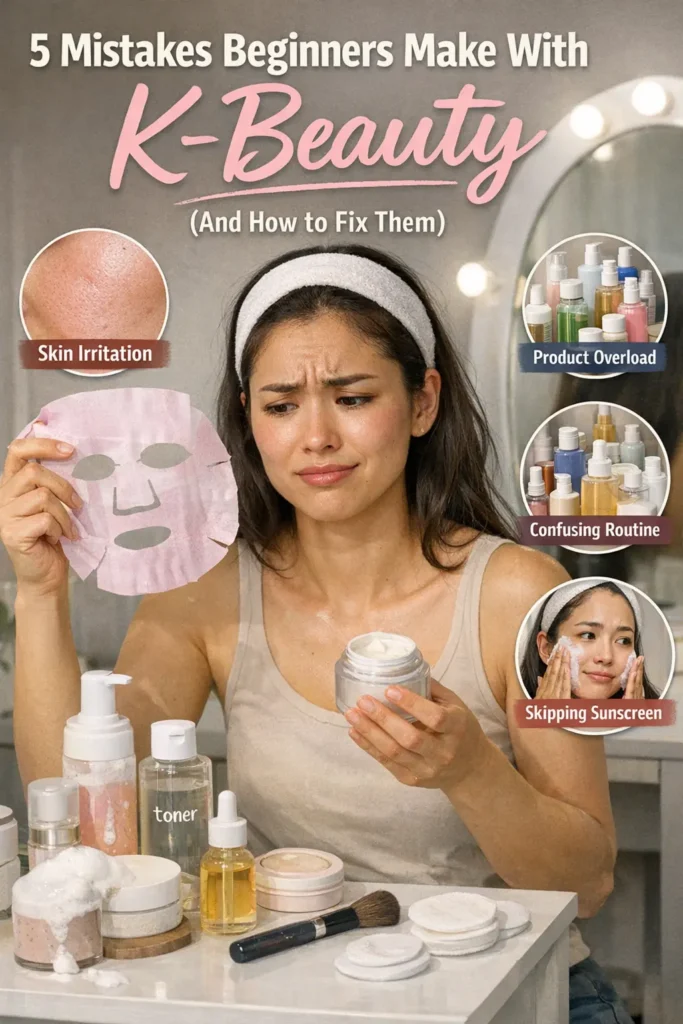
Mistake 1: Buying Too Many Products at Once
You load up on 10 products, put them all on your face, and your skin breaks out. You have no idea which product caused it. Start with 3 to 5 products. Add one new product every 1 to 2 weeks. This lets your skin adjust and lets you identify what works.
Mistake 2: Skipping Sunscreen
This is the most damaging mistake in any skincare routine. UV exposure causes 80% of visible skin aging. Without SPF, every serum and moisturizer you apply works against a tide of daily UV damage. Apply it every morning. Non-negotiable.
Mistake 3: Over-Exfoliating
K-beauty includes exfoliation, but not daily. Exfoliating too often strips your skin barrier, causing redness, peeling, and breakouts. Beginners should exfoliate once a week at most, using a gentle chemical exfoliant (PHA or lactic acid). Skip physical scrubs entirely.
Mistake 4: Using the Wrong Product Order
Apply products from thinnest to thickest. Applying a thick moisturizer before a lightweight serum blocks the serum from reaching your skin. The correct order is always: cleanser, toner, essence, serum, moisturizer, SPF.
Mistake 5: Expecting Results Overnight
K-beauty is a long-term routine. Most people see meaningful improvement in 4 to 6 weeks of consistent daily use. Skipping days resets your progress. The key is showing up every day, not applying more products.
Barrier damage warning: If your skin feels tight, stinging, or reacts to products that used to work, your skin barrier may be damaged. Pause all exfoliants and actives. Simplify your routine to cleanser, moisturizer, and SPF. Use products with ceramides and centella asiatica to rebuild the barrier. Recovery typically takes 2 to 4 weeks.
When to Upgrade to the Full 10-Step Routine
The full 10-step Korean skincare routine is not for everyone. You do not need it to get good skin. But if your 5-step routine is working and you want to address specific concerns more precisely, here is what the additional steps add.
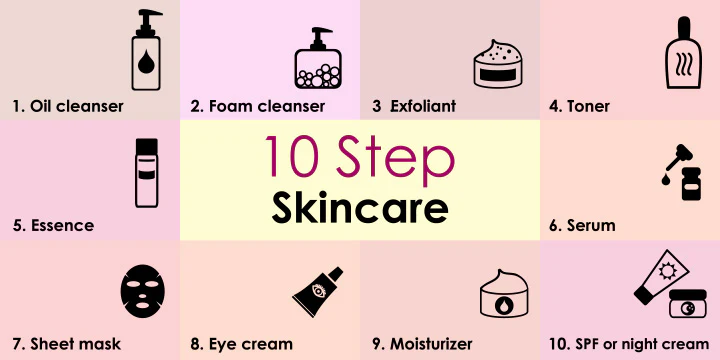
| Sr No. | Step | What It Adds |
|---|---|---|
| 1 | Oil cleanser | Removes oil-based impurities (part of beginner routine) |
| 2 | Water cleanser | Removes water-based impurities (part of beginner routine) |
| 3 | Exfoliator | Removes dead skin cells, 1 to 2 times per week only |
| 4 | Toner | Balances pH, preps skin (part of beginner routine) |
| 5 | Essence | Concentrated hydration and cell turnover support |
| 6 | Serum / Ampoule | Targets specific concerns: acne, pigmentation, aging |
| 7 | Sheet mask | Intensive treatment, 2 to 3 times per week, boosts all steps |
| 8 | Eye cream | Addresses puffiness, dark circles, and fine lines around eyes |
| 9 | Moisturizer | Seals hydration (part of beginner routine) |
| 10 | Sunscreen (AM) / Sleeping mask (PM) | Final protection or overnight treatment |
Add one new step every 2 to 4 weeks. Starting with a sheet mask 2 nights a week is a natural first upgrade. Add eye cream next if puffiness or dark circles are concerns. The exfoliator comes last once your barrier is strong and stable.
Frequently Asked Questions
Do I really need all 10 steps to see results from K-beauty?
No. The 5-step routine gives you everything your skin needs. The full 10-step routine adds targeted treatments for specific concerns. Most dermatologists recommend starting simple and adding steps gradually. Results come from consistency with a few good products, not from using more products.
How much does a beginner K-beauty routine cost in the US?
A solid beginner routine costs $65 to $85 for your first purchase. Each product lasts 2 to 3 months with daily use, bringing your monthly cost to around $25 to $35. Top products like the COSRX Snail Essence ($22) and Beauty of Joseon SPF ($10) deliver results at a fraction of the cost of Western luxury skincare.
Where can I buy K-beauty products in the US?
You can find K-beauty products at Ulta Beauty, Sephora, Target, Walmart, and Amazon. YesStyle and StyleKorean ship directly from Korea for a wider selection. Olive Young, Korea’s largest beauty retailer, is opening its first US physical store in Los Angeles in 2026.
Is K-beauty suitable for men?
Yes. The routine works identically for men. Korean skincare brands like COSRX and Klairs offer lightweight formulas that work well for men’s typically thicker, oilier skin. Start with cleanser, moisturizer, and SPF. The gender-neutral approach is a feature of K-beauty, not an exception.
How long does it take to see results from a K-beauty routine?
Most people notice improved hydration and skin texture within 2 weeks. Clearer, brighter skin takes 4 to 6 weeks of consistent use. Concerns like hyperpigmentation or acne scarring take longer, typically 8 to 12 weeks with targeted actives. The key is not switching products before giving them enough time to work.
What is glass skin and how do I get it with K-beauty?
Glass skin refers to skin that is clear, smooth, and intensely hydrated, appearing almost reflective. You achieve it through consistent hydration layering (toner, essence, moisturizer), regular gentle exfoliation (once a week), brightening ingredients like niacinamide or vitamin C, and daily SPF. It is not a product you buy. It is the result of a consistent routine over several weeks.
Can K-beauty products cause breakouts?
Introducing too many new products at once is the most common cause of K-beauty-related breakouts. Your skin needs time to adjust. Add one product every 1 to 2 weeks. Patch test everything on your inner arm first. If a product causes consistent breakouts, redness, or stinging, stop using it. Sensitive or acne-prone skin should start with fragrance-free, single-ingredient formulas.
What is the difference between an essence and a serum in K-beauty?
Essences are lightweight and focus on hydration and preparing your skin to absorb what comes next. Serums are thicker with higher concentrations of active ingredients targeting specific concerns like acne, pigmentation, or aging. In your routine, apply essence before serum. If choosing one, start with essence. It is the most universally beneficial step for all skin types.
Read Next on GlobleVide
- What Is Glass Skin? How to Get It With Drugstore Products (2026)
- Best K-Beauty Brands Available in the US Right Now
- Skin Barrier Repair: What It Means and How to Fix It Fast
- Affordable Drugstore Skincare Routine for Every Skin Type (2026)
Sources
Credence Research. (2025). US K Beauty Product Market. credenceresearch.com
Korea Customs Service / KITA. (2025). US K-beauty export data Q1 2025.
Ulta Beauty. (2025). Q1 2025 Earnings Report, Korean Skincare Segment.
Market Data Forecast. (2025). Global K-Beauty Products Market. marketdataforecast.com
NIQ / NielsenIQ. (2025). K-Beauty’s Viral Rise in the US Market. nielseniq.com
Jaliman, D. MD. (2026). Best Korean Skincare Products. Parade. parade.com
Cleveland Clinic. (2023). Korean Skin Care Routines: What You Need to Know. health.clevelandclinic.org
Tricociu University. (2026). Skincare Industry Statistics 2026. tricociuniversity.edu

Editorial Note: This article follows GlobleVide’s Editorial Policy and Fact-Checking Policy.