
Building a mobile app usually starts slow.
In 2026, tools like RapidNative are trying to flip that timeline completely.
RapidNative is an AI-powered app builder designed specifically for React Native and Expo projects. It’s primarily used as a rapid prototyping and flow-validation tool for mobile apps, rather than a full backend development platform.
This guide explains what it does, how teams use it in practice, and where its limits still matter.
Quick Answer
RapidNative is an AI app builder that generates production-ready React Native UI screens and navigation flows from prompts, images, or sketches.
It’s used to prototype, iterate, and export real mobile code fast—without no-code lock-in or web-only shortcuts.
What Is RapidNative, Exactly?

Is It a No-Code Tool or a Developer Tool?
RapidNative sits in a new middle ground.
It’s not a traditional no-code builder. However, it’s also not just another AI code generator. RapidNative focuses on mobile-first UI and flow creation using the React Native + Expo + NativeWind stack.
Instead of starting with boilerplate, you start with intent:
- Describe a screen in plain English
- Upload a design or screenshot
- Sketch a layout on the canvas
RapidNative turns that input into structured, readable React Native code.
For know How AI Is Changing Jobs in the United States you can visit our blog now!
How RapidNative Works in Practice
From Prompt to Canvas to App
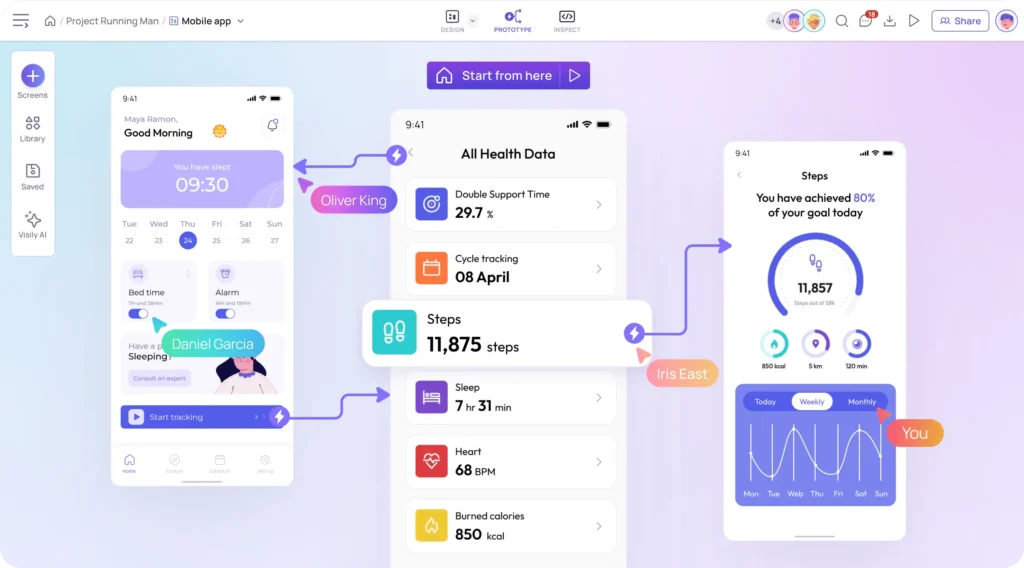
The workflow stays simple by design.
- Prompt-to-screen
Type what you want. The AI generates a working mobile screen. - Multi-input generation
Upload images, Figma screenshots, or rough sketches. The system converts them into UI. - Visual canvas
Link screens together. Map real user journeys, not isolated mockups. - Inline edits
Adjust layout, colors, or components through chat or direct edits. - Export real code
Download a standard Expo project. Open it in VS Code or push to GitHub.
This “canvas-first” approach is one reason RapidNative often comes up in GlobleVide discussions about modern prototyping workflows.
How Teams Are Using RapidNative in Real Projects
I’ve seen RapidNative used most effectively during early-stage product work.
Teams use it when ideas move faster than dev cycles.
For example, one founder I worked with used RapidNative to build three different onboarding flows in a single afternoon. Normally, that would have taken weeks of back-and-forth. Instead, the team tested flows on actual devices before committing engineering time.
The key difference wasn’t speed alone. It was clarity. Everyone could see how the app behaved, not just how it looked.
This is where RapidNative tends to fit best: early-stage product thinking, before teams commit full engineering resources.
If your learning content also relies on visuals, you may find it useful to explore What Is VicSee AI? A Look at the AI Video & Image Generator, where we examine how AI-generated visuals are being used alongside structured learning tools.
What Makes RapidNative Different From Other AI Builders?
Why Teams Don’t Treat It Like a Demo Tool
RapidNative stands out because it’s built for mobile from day one.
Key differences include:
- Uses React Native, Expo, and NativeWind
- Generates modular, extendable TypeScript code
- Focuses on flows, not just screens
- Runs instantly on real devices
Information Gain: Many AI builders generate UI snapshots. RapidNative focuses on navigation logic and flow validation, which is usually the most expensive part to redo later.
Who RapidNative Is Most Useful For
Teams Working With Ideas Under Pressure
Product managers & innovation teams
- Validate flows before engineering sprints
- Share interactive prototypes with stakeholders
- Test multiple versions quickly
Startup founders
- Build pitch-ready MVPs
- Demo real mobile apps to investors
- Pivot without restarting from scratch
Freelancers & small agencies
- Skip boilerplate setup
- Handle scope changes without delays
- Deliver earlier in the project cycle
Designers
- Turn Figma-style thinking into working apps
- Test usability on real devices
- Preserve design intent through code export
As AI reshapes work at a rapid pace, many people are responding by strengthening practical skills. GlobleVide explored this shift in Best Free AI Tools for Writing and Content Creation (2026 Guide), which looks at tools people are already using to adapt.
Current Limitations to Be Aware Of
Where Manual Work Still Matters
RapidNative isn’t trying to replace developers.
Current limits include:
- Frontend-focused generation
- No automatic backend logic or auth
- Advanced animations still require coding
- Native modules need manual integration
In contrast to no-code platforms, these limits are intentional. You own the code and extend it freely.
Pricing Snapshot (2026)
- Free tier: 20 credits/month (public projects)
- Starter ($20/mo): 50 credits + private projects
- Pro ($50/mo): 150 credits + full exports
- Enterprise: Custom pricing
Enough flexibility to test without long-term commitment.
Pricing and features may change over time. Always check the official site for the most current details.
Why RapidNative An AI App Builder Matters
Mobile development hasn’t slowed down. However, the cost of wrong decisions keeps rising.
RapidNative matters because it reduces wasted effort. Teams can validate ideas visually and functionally before investing months of engineering time.
That shift—from guessing to seeing—is something GlobleVide continues to track across AI tooling trends.
While tools are becoming more accessible, broader questions remain about how AI will affect jobs and creativity. GlobleVide examines those concerns in Godfather of AI Warns 2026 Could Be a “Job Shock” Year — What It Means, offering context behind the rapid adoption of these tools.
Key Takeaways (Skimmable)
- RapidNative builds real React Native apps, not demos
- Mobile-first by design, not adapted from web tools
- Canvas-based flow mapping reduces rework
- Code remains editable and exportable
- Best used for fast prototyping and validation
Frequently Asked Questions
Related Reads on GlobleVide
- What Is Mexty? An AI Tool for Creating Interactive Learning Content
- What Is VicSee AI? A Look at the AI Video & Image Generator
- Godfather of AI Warns 2026 Could Be a “Job Shock” Year — What It Means
- Best Free AI Tools for Writing and Content Creation (2026 Guide)
- Is Gemini 3.0 Pro the Best AI for Business in 2026?
Final Thought
RapidNative doesn’t promise magic. It promises momentum. For teams building mobile apps in 2026, that difference is often what keeps good ideas from stalling before they ever ship.

Editorial Note: This article follows GlobleVide’s Editorial Policy and Fact-Checking Policy.

Why Familiar Foods Are Replacing Expensive Wellness Trends in 2026
For years, wellness meant chasing the next expensive ingredient or viral diet.In 2026, many Americans…

What Is Engain? The AI Tool for Reddit Organic Marketing Explained
Reddit can drive serious traffic—but it’s also easy to get ignored or banned.In 2026, tools…

What Is RapidNative? An AI App Builder for React Native Projects
Building a mobile app usually starts slow.In 2026, tools like RapidNative are trying to flip…

Why Do So Many 2026 Movies Feel Confusing to Audiences?
Last updated: January 21, 2026 Some movies feel confusing because you missed something.Others feel confusing…

What Is Mexty? An AI Tool for Creating Interactive Learning Content
Creating engaging learning content used to take days—and a lot of technical know-how.In 2026, tools…

Best Korean Sunscreens to Try in 2026 (Dermatologist-Loved Picks)
Sunscreen only works if you actually want to wear it.That’s why, in 2026, so many…