
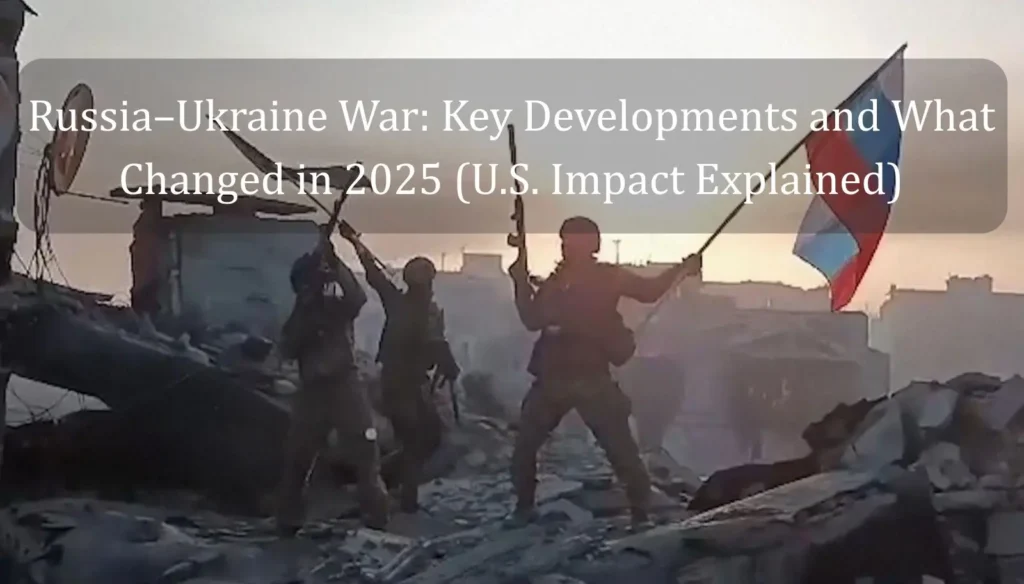
In 2025, the Russia-Ukraine war was shaped by a major shift in U.S. policy, renewed efforts to negotiate a settlement, and continued heavy fighting on the ground. While the U.S. pushed for an agreement involving significant territorial concessions from Ukraine, Russia continued making slow, costly advances in the east. Meanwhile, European allies grew increasingly concerned by both the U.S. diplomatic approach and the intensifying battlefield conditions. The conflict between Russia and Ukraine continues to shape global politics, international security, and economic conditions in 2025. While fighting remains active, several important developments shifted political and military dynamics over the last year, including international support, energy supply changes, and ongoing diplomatic discussions.
Many Americans want to understand how the war affects the United States, especially regarding national security, global stability, and energy prices.
Key Points
- Fighting continues in several regions
- NATO allies increased military support
- Russia expanded drone and missile attacks
- Ukraine strengthened defensive operations
- Global energy supply remains affected
Key Developments in 2025
Here is some Key Developments in 2025-26:
1. U.S.-Led Push for a Negotiated Settlement
Under President Trump, the U.S. launched direct talks with both Russia and Ukraine aimed at ending the war. Early proposals suggested Ukraine should give up Crimea and occupied regions of the Donbas, and agree not to join NATO, in exchange for security guarantees and reconstruction support.
These proposals met strong resistance from Kyiv and European partners. President Volodymyr Zelenskyy reiterated that Ukraine has no right to surrender territory. As of December 2025, a revised U.S. plan remains under negotiation, with major divisions still unresolved.
2. Intensified Fighting and Russian Territorial Gains
Despite diplomatic efforts, fighting escalated throughout 2025.
- Russia made slow, grinding advances in Donetsk Oblast.
- Pokrovsk became a central battleground and was largely captured by Russian forces by December.
- Ukraine inflicted heavy losses but faced growing manpower and equipment shortages.
3. Strikes on Critical Infrastructure
Both sides expanded long-range attacks:
- Ukraine’s drone strikes temporarily shut down nearly 40% of Russia’s oil-refining capacity in October.
- Russia intensified attacks on Ukraine’s power grid, destroying a large share of its electricity generation and causing widespread blackouts.
4. North Korean Troop Involvement
North Korean units briefly joined Russian forces in early 2025, particularly in the Kursk offensive, but were reportedly withdrawn by February after suffering heavy casualties.
How U.S. Policy Shifted in 2025
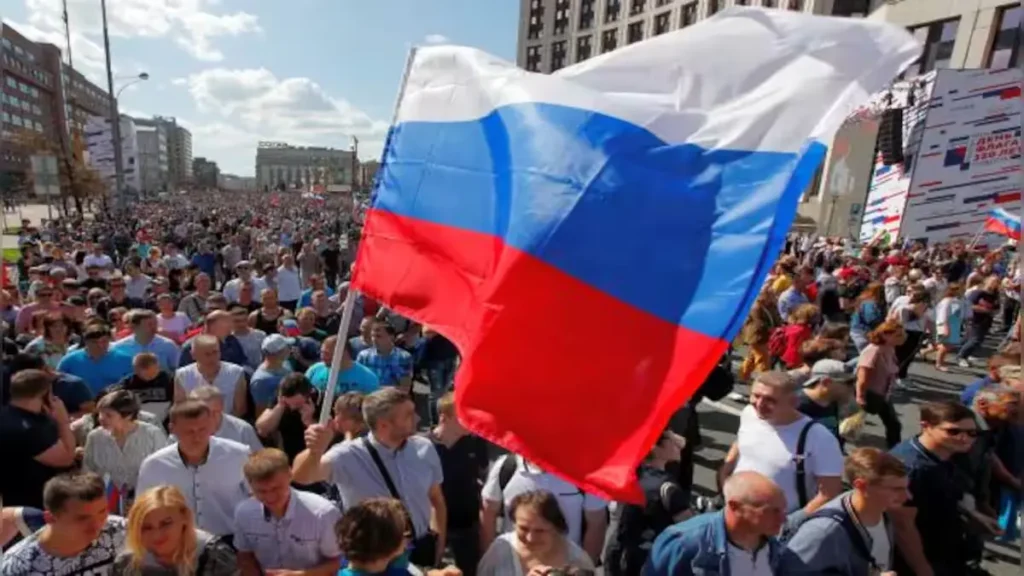
A Major Strategic Pivot
The Trump administration reversed the Biden-era strategy of supporting Ukraine “for as long as it takes.” Instead, Washington emphasized achieving a near-term negotiated settlement, even if that meant Ukraine conceding territory.
Changes in Military Aid
U.S. military aid was paused briefly in March, then resumed under new conditions. Assistance now moves through a NATO-based financing system (PURL), shifting much of the financial responsibility toward European allies.
New National Security Priorities
The 2025 U.S. National Security Strategy reduced Europe’s centrality in U.S. foreign policy and stated that returning Ukraine to its pre-2014 borders was not realistic—a significant departure from previous U.S. positions.
Pressure on Ukraine
The U.S. increased pressure on Kyiv to negotiate, creating tension with several European governments. Russia, meanwhile, saw the diplomatic split between Western countries as an advantage and continued pursuing its long-term goals.
Russian Offensive and Cognitive Warfare (December 2025 Assessment)
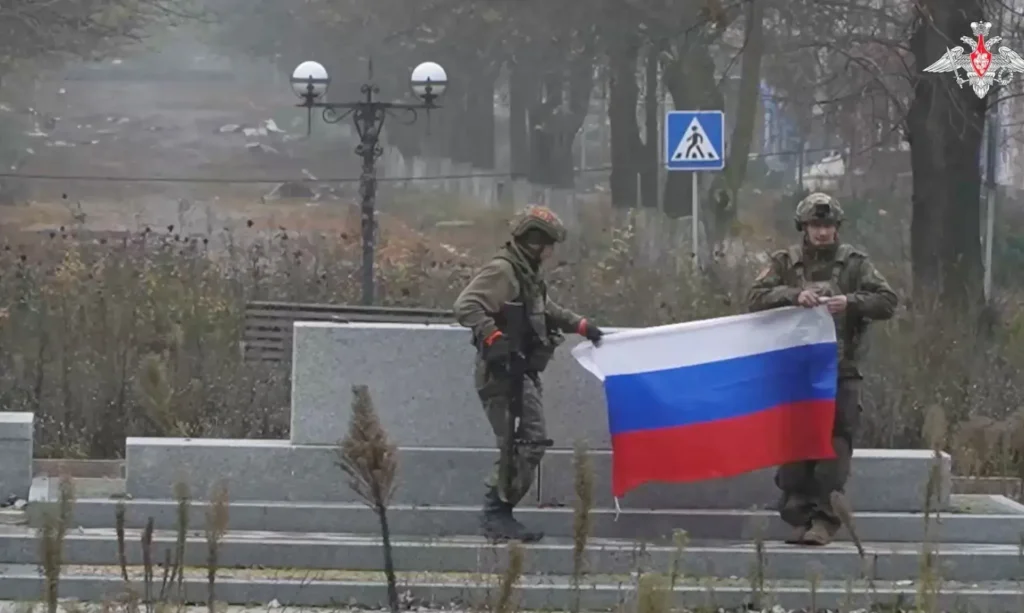
Russia’s Messaging Strategy
The Kremlin intensified its information campaign to portray Russia as winning a war of attrition and possessing a resilient economy. Analysts say many of these claims do not match battlefield realities or Russia’s deeper economic vulnerabilities.
Russia’s War Aims Remain the Same
Despite its slow advances, Russia continues to demand:
- veto power over NATO expansion
- removal of Ukraine’s government
- installation of a pro-Russian regime
- Ukrainian territorial concessions beyond areas Russia currently controls
Putin again insisted that all of Luhansk and Donetsk oblasts are “historically Russian.”
Battlefield Reality: Slow, Costly Advances
- Russia gained 0.77% of Ukrainian territory in 2025, about 4,669 square kilometers.
- These gains came at enormous cost—Ukraine estimates 391,000 Russian casualties.
- Advances remain limited to a “footpace” due to the drone-dominated battlefield.
Russian forces are unlikely to break through the heavily fortified “Fortress Belt” of Donetsk quickly. Analysts estimate capturing the region could take two to three more years and would require resources Russia may not be able to sustain.
Russia’s Strategy: Negotiate What It Cannot Win Militarily
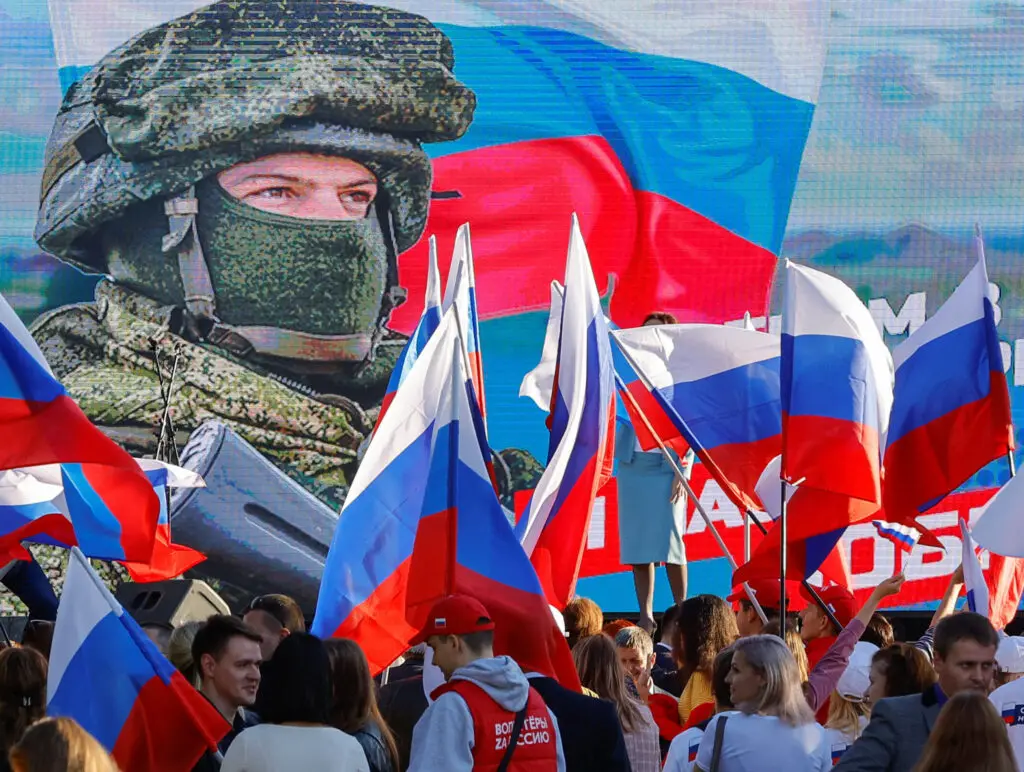
Because Russia cannot achieve its full objectives on the battlefield, the Kremlin aims to use psychological and diplomatic pressure to force Ukraine and the West into concessions. Ceding Donetsk, analysts warn, would set the stage for future Russian offensives from a stronger position.
The year 2025 brought:
- a dramatic shift in U.S. policy
- continued heavy fighting
- incremental Russian gains
- deeper strain between Kyiv, Washington, and Europe
- intensified Russian propaganda
- no clear path yet to a durable peace
The conflict remains far from resolution, and 2026 is likely to bring continued military and diplomatic uncertainty.
What Changed in 2025
Ukraine continued receiving international military aid, especially from the United States and European partners. This support included air defense systems, financial assistance, and humanitarian help.
Russia also increased long-range attacks, drone technology, and missile use, impacting major Ukrainian cities and infrastructure.
NATO’s Role
NATO members increased coordination and provided additional training, equipment, and intelligence support. These efforts aim to protect Ukraine’s defense capabilities and prevent further regional escalation.
Diplomacy and Peace Efforts
Although diplomacy remains challenging, international discussions continue through global organizations. Most analysts believe a long-term settlement will require negotiations supported by multiple countries.
How the War Affects the U.S.
The conflict influences:
- energy prices
- global supply chains
- defense spending
- international relations
- European security
Americans may see higher energy or transportation costs, depending on global supply and geopolitical risks.
Will the War End Soon?
Experts say the war may continue through 2026 since neither side has strong incentives to stop fighting yet. A long conflict remains likely, although diplomatic progress could change future direction.
U.S. National Security Interests
The United States continues supporting Ukraine to prevent Russian territorial expansion and protect European security. Many U.S. officials believe helping Ukraine strengthens international stability and discourages future aggression.
Final Outlook
The Russia–Ukraine war remains a major global challenge in 2025, with ongoing fighting and shifting international alliances. The conflict will likely influence global politics and U.S. foreign policy well into 2026.
FAQs
