
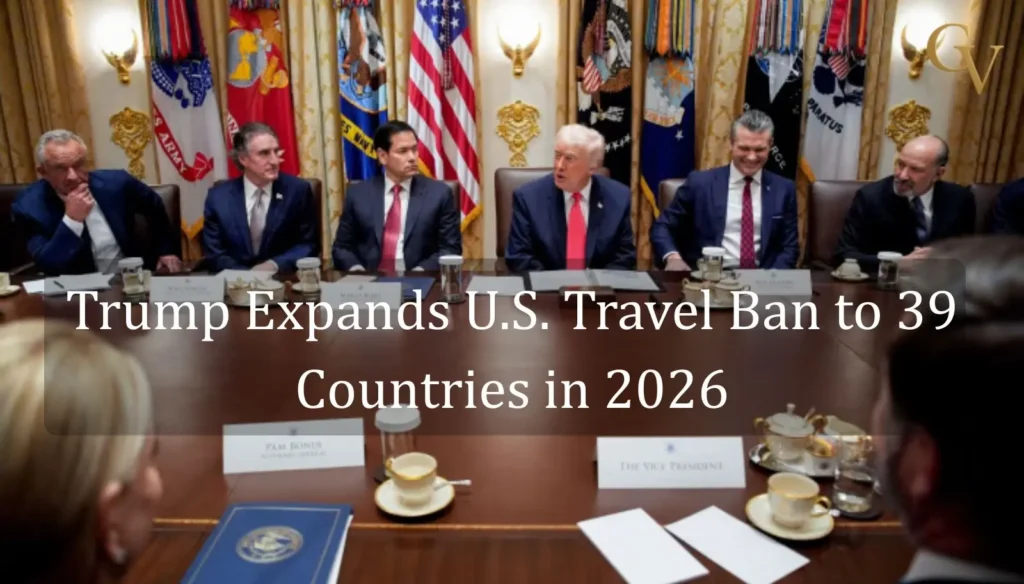
On December 16, 2025, President Donald Trump signed a sweeping travel ban expansion that doubles the number of countries affected by U.S. entry restrictions — a policy shift poised to reshape international travel, immigration, and U.S. foreign relations in 2026. The expanded ban takes effect January 1, 2026, and adds several nations facing either full or partial U.S. travel restrictions based on claimed security screening and vetting concerns. travel and immigration restrictions, sharply expanding a controversial policy originally unveiled in mid-2025. The updated ban will affect travel, visas, and immigration from dozens of nations, reflecting one of the most sweeping changes to U.S. entry rules in years.
The expansion has already drawn strong reactions at home and abroad — from national security proponents who praise the move as necessary to critics who call it discriminatory and harmful to refugees, U.S. allies, and global mobility.
What Is the 2025 U.S. Travel Ban Expansion?
The new proclamation broadens a controversial policy first expanded earlier in 2025 to cover 19 countries. The updated list includes a total of 39 nations whose citizens will either face a full ban on U.S. visas or partial travel restrictions beginning early next year.
The White House says the decision aims to protect national security, public safety, and border integrity by targeting countries with “persistent deficiencies in information sharing, security vetting, and civil document reliability.” Critics argue it unfairly targets communities based on nationality rather than individual threat assessments.
What’s Changed: Travel Bans Now Cover 39 Countries
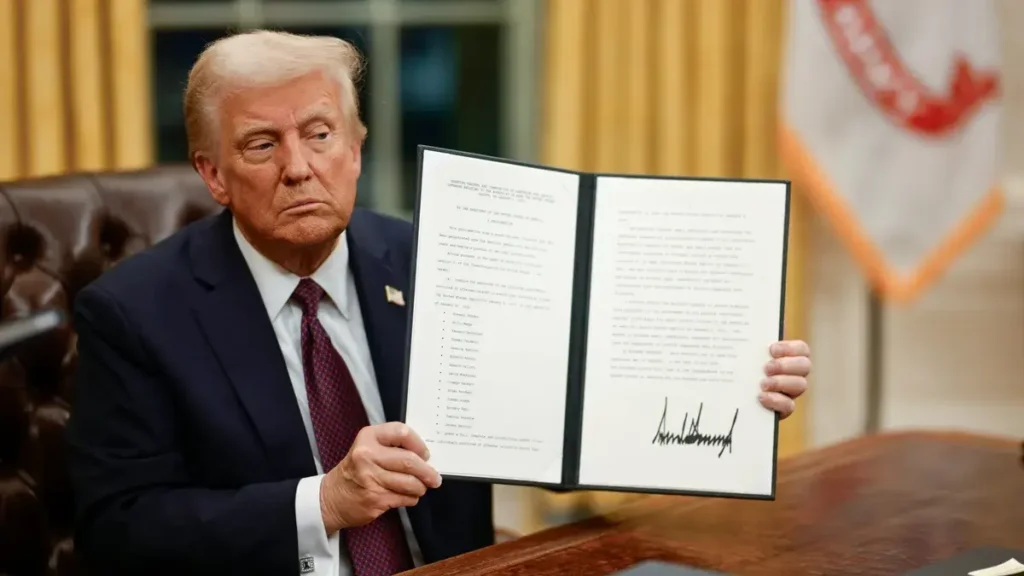
As of January 1, 2026, the travel ban will apply to 39 countries, up from 19 earlier in 2025, and includes nations now under full or partial restrictions for travel and immigration to the United States.
Under Trump’s latest proclamation, the list includes:
- Full travel bans on nations such as Syria, Burkina Faso, Mali, Niger, and South Sudan.
- Passport restrictions for people holding travel documents issued by the Palestinian Authority.
- Partial travel restrictions for additional nations — such as Nigeria, Angola, Tanzania, Ivory Coast, and Zimbabwe — where citizens may face visa limits or enhanced vetting for tourist, student, and work visas.
The administration says the expanded travel ban targets countries with “insufficient security screening and information sharing”, high rates of visa overstays, or weak cooperation on deportations and public safety.
Countries Facing Full U.S. Travel Bans
Under the expanded policy, citizens of several nations — including Syria, Burkina Faso, Mali, Niger, South Sudan, Laos, and Sierra Leone — will be fully barred from entering the United States. Individuals traveling with Palestinian Authority travel documents are also prohibited unless they qualify for a specific exception. Fragomen
The full ban applies to both immigrant and non-immigrant visas, meaning tourist, work, student, and business travel are restricted unless exemptions apply. Fragomen
Partial Travel Restrictions: A Closer Look
In addition to the full bans, the proclamation imposes partial restrictions on citizens of another 19 countries. These limits typically affect temporary visas — including tourist (B visas), student (F or M), and exchange visitor (J) visas — but may allow entry under other specific categories. Fragomen
Among those now facing partial bans are nations such as:
- Nigeria
- Angola
- Senegal
- Côte d’Ivoire
- Zimbabwe
- Tanzania Fragomen
This broader list includes many countries in sub-Saharan Africa, the Caribbean, and Oceania, raising concerns about global travel restrictions affecting millions of would-be U.S. visitors. The Washington Post
Who Is Exempt From the Travel Ban?
Not all travelers from restricted countries are barred. The proclamation includes key exemptions to avoid harming current legal residents or essential travel:
- U.S. lawful permanent residents (Green Card holders)
- Individuals with valid visas issued before January 1, 2026
- Diplomats and government officials
- Athletes, coaches, and personnel traveling for major events such as the 2026 FIFA World Cup
- Certain national interest exceptions, such as critical business travelers and security partners Fragomen
These exemptions provide relief for students, professionals, and families who already have legitimate ties to the United States.
Why Has the U.S. Travel Ban Expanded?
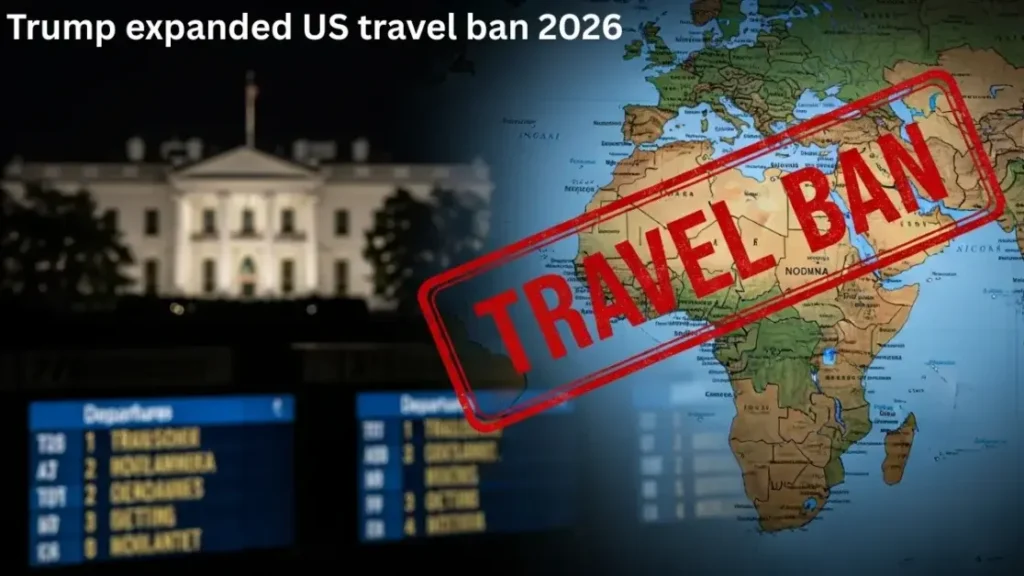
The White House cited multiple long-term policy goals behind the travel ban expansion:
National Security Risks
Officials argue that some nations lack reliable systems to verify identity documents or share critical safety information with U.S. agencies. The Washington Post
Visa Overstay and Immigration Control
High rates of visa overstays and limited cooperation in deportation or repatriation efforts were highlighted. Fragomen
Response to Specific Incidents
Recent events — including a shooting involving an Afghan national in Washington, D.C. — have pushed the administration to tighten entry policies as part of a broader national security strategy. The Washington Post
However, immigration lawyers and civil-rights advocates warn the policy conflates nationality with security risk and unfairly penalizes people with no ties to extremist activities. AP News
How the Travel Ban Affects Visa Applicants and U.S. Tourism
Visa Application Backlogs
Individuals from newly restricted countries may see delays or suspensions in visa processing — especially for student, work, or visitor visas. Fragomen
Impact on U.S. Tourism Economy
Experts say travel bans and stricter screening can reduce tourism revenue and international business travel — a concern echoed by hospitality and airline industries. Dawn
Public Diplomacy and International Perception
The ban has sparked criticism from foreign governments and advocacy groups who say it could strain diplomatic ties and fuel perceptions of U.S. unilateralism. AP News
Legal Challenges and Constitutional Debate
The policy mirrors past travel restrictions under the 2017 travel ban, which faced multiple court challenges alleging discrimination and violations of U.S. law. Courts in previous cases blocked parts of the ban before the Supreme Court upheld a revised version. Wikipedia
Civil liberties advocates have already signaled intent to challenge the 2025 expansion on constitutional and human rights grounds, arguing that blanket restrictions based on nationality may violate equal-protection principles. Legal battles could play out over months or years in federal courts.
Unique Aspects and Uncovered Topics
Passport Security and Global Document Fraud
One reason cited for the ban’s expansion is concerns about passport and civil document fraud. Countries with weak identity systems make it harder for U.S. officials to verify traveler information, which in turn contributes to tighter entry controls. Fragomen
Social Media & Future Travel Screening
Alongside travel bans, the U.S. government is proposing new rules requiring visa waiver applicants to disclose social media history, signaling a broader shift toward digital vetting of visitors. This change could affect travelers from visa-waiver nations like the U.K. and France. Financial Times
What Happens Next?
- Travel Bans Take Effect: January 1, 2026
- Legal Challenges: Expected in U.S. courts
- Periodic Review: Government officials will assess the list and adjust restrictions based on security cooperation agreements.
Why the Expansion? National Security Cited
Officials have linked the expanded policy to national security concerns, including a recent violent incident in Washington, D.C. — where an Afghan national was arrested and charged in the shooting of two National Guard troops. Trump and senior advisers have argued that stricter entry controls will help prevent future attacks and tighter vetting is essential to border and homeland security.
However, critics say the measure goes beyond security and amounts to a broad travel and immigration crackdown that unfairly targets citizens based on nationality rather than individual risk assessments. Human rights advocates have called out the ban for disproportionately impacting people from low- and middle-income countries and undermining longstanding refugee protections.
Who Is Affected — And Who Is Exempt?
The expanded ban affects both temporary visitors and people seeking to immigrate — including tourists, students, and family-based immigrant applicants — from the listed countries.
Yet several categories are exempt from the new restrictions, including:
- U.S. lawful permanent residents (green card holders).
- Individuals with valid visas issued before the ban’s effective date.
- Diplomats, certain official visitors, and international athletes.
- Some humanitarian and specialized visa categories, including some refugee and Special Immigrant Visa holders.
These exemptions are intended to limit disruption for people already integrated into U.S. systems or traveling for specific diplomatic, educational, or sporting events.
International Reactions and Diplomatic Impact
The travel ban expansion has stirred global concern, with governments, immigrant communities, and legal experts warning it could strain U.S. relations with partner nations affected by the restrictions. Under U.S. law and international agreements, critics argue that collective travel bans could conflict with asylum commitments and human rights norms.
Several foreign governments have already expressed objections, noting that bans on citizens from entire countries could affect legitimate tourism, study, and business travel. Some nations might consider reciprocal measures, which could result in restrictions for U.S. visitors abroad.
Effects on Immigration Flow and Refugee Policy
Beyond travel disruption, the policy shift has implications for U.S. immigration and refugee systems. Limits on visa issuance and processing for people from banned countries could reduce refugee admissions and slow family reunification efforts. Advocacy groups say the changes could particularly impact people who fled conflict zones but do not qualify under strict exemptions.
The expanded policy also adds to a broader set of immigration enforcement measures pursued by the Trump administration in 2025, including enhanced deportation efforts and asylum rule changes.
How This Travel Ban Differs From Past Policies
The current expansion builds on a broader history of U.S. travel restrictions. During Trump’s first presidential term, a series of executive orders limited entry from several predominantly Muslim majority countries. Those earlier measures — sometimes called the “Muslim travel ban” — were upheld by the U.S. Supreme Court in 2018 but later revoked by the Biden administration.
In 2025, Trump signed Executive Order 14161 to enhance vetting and screening procedures, laying the groundwork for this latest travel policy shift under national security justifications.
What Travelers Should Know
If you’re planning to travel to the U.S. in 2026, here’s what to keep in mind:
- Check visa eligibility early: Many travelers from affected countries will face limits or bans on certain visas.
- Understand exemptions: Permanent residents and certain approved visa holders remain eligible to enter.
- Monitor policy updates: The list of affected countries could change again if conditions improve or deteriorate in the future.
Airlines, travel agencies, and U.S. consulates are expected to issue additional guidance as the effective date approaches.
Broader Debate: Immigration Policy and U.S. Borders
The expanded travel ban taps into ongoing debates over U.S. immigration policy, including how to balance border security with humanitarian obligations. Supporters claim the policy protects Americans, while opponents see it as discriminatory and overly broad — especially when applied without individualized assessments of risk.
Legal challenges may arise once the policy takes effect, particularly if advocacy groups argue the ban violates immigration laws or constitutional protections.
Longer-Term Global and Economic Effects
Travel bans of this scale can ripple beyond national security and border control, affecting tourism, foreign investment, and international education. Countries newly restricted may see declines in student mobility and business travel with U.S. counterparts. There’s also potential impact on cultural exchange and scientific collaboration — areas where travel plays a key role.
Conclusion: A New Era of U.S. Travel Policy
The expanded travel ban represents one of the most significant shifts in U.S. border and immigration policy in years. With far-reaching effects on immigration law, international relations, and global mobility, the policy continues a trend of stricter entry standards under the Trump administration — with deep consequences for travelers, families, and world citizens planning to visit America in 2026 and beyond.
FAQs
