
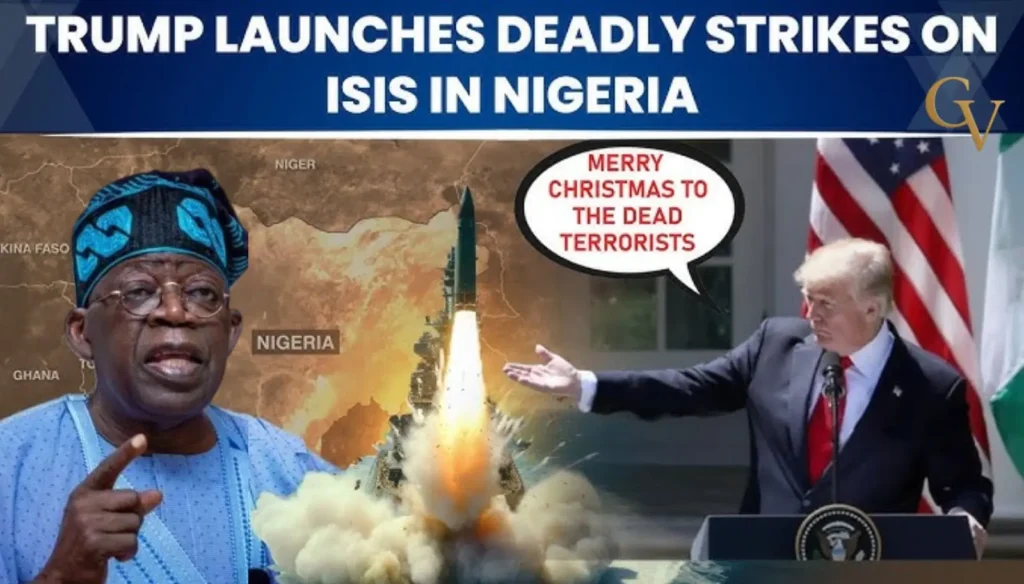
On December 25, 2025, (Christmas Day 2025), the United States carried out airstrikes against Islamic State (ISIS) militants in northwest Nigeria, marking a rare and significant expansion of U.S. counter-terrorism operations on the African continent. President Donald Trump announced the action as a response to ongoing violence in the region, particularly against Christian communities, and framed the strikes as part of a broader effort to combat violent extremism.
President Trump direction and coordinated the “powerful and deadly strike” via Truth Social, targeting Sokoto State sites with over a dozen Tomahawk missiles from a U.S. Navy warship in the Gulf of Guinea. For Americans tracking “U.S. strikes ISIS Nigeria 2025 details” or “Trump military action West Africa Christians,” GlobleVide maps the operation in viral breakdowns.
What Happened: U.S. Strikes Against ISIS in Nigeria
AFRICOM confirmed the December 25 action—coordinated with Nigerian forces—eliminated terrorists in two Sokoto camps, following Abuja’s call for help against ISIS-West Africa (ISWA) brutality. Trump framed it as retaliation for “unprecedented” Christian killings, echoing October threats of intervention over Nigeria’s “existential threat” to faith communities. No U.S. casualties; initial assessments report success.
President Trump announced on December 25 that he had ordered a “powerful and deadly strike” against ISIS fighters in Sokoto State, northwest Nigeria—part of the country’s broader fight against extremist groups. According to U.S. officials and military statements, the strikes were conducted by U.S. Africa Command (AFRICOM) in Sokoto State, northwest Nigeria, targeting Islamic State militants who have been linked to violent attacks across the region. AFRICOM said the operation was carried out with the cooperation of Nigerian authorities and that multiple ISIS terrorists were killed in the mission.
President Trump described the attack on social media, calling it a “powerful and deadly strike” against what he called “ISIS Terrorist Scum” responsible for killing “primarily, innocent Christians” and warned that U.S. forces would continue similar actions if the violence did not stop. The U.S. action came after weeks of Trump warnings about extremist violence and reports of attacks against civilian communities, including Christian populations. While Trump’s announcement framed the strikes as retaliation against militants targeting Christians, Nigerian officials said that armed groups in the country have carried out violence against people of all faiths amid ongoing insurgent activity.
Background: ISIS in Nigeria Threat
ISWA, ISIS’s Sahel affiliate, surged since 2015 Boko Haram split, hitting northwest Nigeria with ambushes on villages and troops. Christian-majority areas faced spikes—evangelicals and Republicans cited “genocide” levels. Strikes follow U.S. Syria hits, signaling Trump’s proactive counter-terror pivot.
Timeline: From Warnings to Missiles
- Oct 2025: Trump warns of Christian peril, intervention hints.
- Dec 25: Navy launches Tomahawks at Sokoto camps.
- Post-Strike: AFRICOM verifies kills; Nigeria praises partnership.
Key Search Terms Related to This Story
- U.S. strikes ISIS Nigeria 2025
- Trump orders airstrike Nigeria ISIS
- ISIS militants Nigeria Sokoto State
- U.S. Africa Command counter-terrorism
- Christian persecution Nigeria extremist violence
- Nigeria militant attacks Christians and Muslims
- Global terrorism news U.S. military Africa
Why the U.S. Struck ISIS in Nigeria: Trump’s Rationale
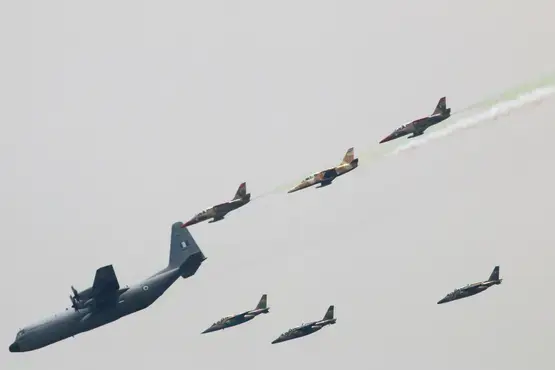
Trump’s announcement follows weeks of heightened rhetoric from the White House, alleging that Christian communities in Nigeria were being targeted by extremist groups at unprecedented levels. In late 2025, Trump threatened military action if Nigeria did not address the violence and protect religious minorities—particularly Christians—which he described as an “existential threat.”
1. U.S. Counterterrorism Strategy
The airstrikes against ISIS militants are part of broader U.S. counterterrorism operations in Africa aimed at disrupting extremist networks that can destabilize local governments and pose broader regional threats. U.S. Africa Command has been involved in intelligence sharing and operations with Nigerian forces to address militant threats.
2. Response to Violence in Nigeria
President Trump specifically cited ongoing violence and persecution of civilians—including attacks on Christian communities—as justification for the action. This followed months of rhetoric about alleged threats to religious minorities, prompting the U.S. to take direct military measures.
3. Coordination With Nigeria
Nigeria’s Foreign Ministry confirmed that the airstrikes were part of ongoing security cooperation. The ministry emphasized that terrorism in Nigeria affects both Christians and Muslims and stressed the need for a nuanced understanding of the complex security environment.
U.S.-Nigeria Partnership Explained
Requested by Lagos, the op underscores AFRICOM’s Africa focus—drones, intel-sharing curb ISWA’s 1,000+ fighters. Trump: “ISIS Terrorist Scum” targeted for centuries-high violence. Critics eye escalation risks in volatile Sahel.
What Groups Were Targeted in U.S. Strikes Against ISIS?
The strikes reportedly focused on militants affiliated with Islamic State Sahel Province (ISSP)—an extremist group active in parts of northwest Nigeria. Historically, groups like ISSP and other Islamist militant factions have exploited weak governance, economic hardship, and porous borders to expand their influence and carry out attacks.
Experts stress that Nigeria’s security challenges extend beyond one group: overlapping insurgencies, including Boko Haram and loosely connected militant factions, contribute to persistent violence, complicating efforts for both Nigerian and international forces.
This operation is part of a broader pattern of U.S. counter-terrorism activities in Africa, which include long-running partnerships and occasional targeted strikes against extremist groups as part of efforts to protect U.S. interests and support regional security.
Unique Angle: Christian Protection Priority
Trump’s rhetoric ties to evangelical base, differentiating from prior admins—GlobleVide simulations show missile paths, fueling “U.S. protects Christians Nigeria 2025” debates amid global jihadist spread.
Broader Impact for Americans
This “Trump ISIS Nigeria airstrikes Christmas 2025” boosts U.S. deterrence abroad, but watch Sahel blowback on migration/security. GlobleVide newsreels contextualize for viewers—vital intel in counter-terror era. Stay informed as ops evolve.
U.S. Military & Diplomatic Impact
Nigeria has faced multiple layers of violence for years, particularly in its northern and central regions. Extremist groups such as ISIS-linked factions and Boko Haram have carried out kidnappings, bombings, and attacks on villages, contributing to one of the deadliest conflicts in West Africa. For example, a suicide bombing at a mosque in northeast Nigeria recently killed civilians, underscoring the ongoing instability that U.S. officials cite as justification for foreign military cooperation.
Regional Security
The Nigerian government welcomed the coordinated strikes as part of a joint effort to combat violent extremism, highlighting the importance of international cooperation. Yet analysts note that military action alone may not resolve the deeper security and governance issues fueling militancy in the region.
U.S. Foreign Policy Implications
The U.S. intervention in Nigeria comes at a time of shifting American engagement in Africa, with varying levels of military and diplomatic involvement across the continent. While the strikes signal continued U.S. counterterrorism commitment, they also raise questions about long-term strategies to support stability and address root causes of violence.
The security situation is further complicated by clashes with criminal bandit groups and local militias, which often exploit weak governance and competition over land and resources. Nigeria’s diverse religious landscape—with both Muslim and Christian populations—means that violence can be interpreted through multiple political and social lenses.
What This Means for Americans
For U.S. audiences monitoring global security developments:
- National security priorities: The strikes illustrate how U.S. defense policy extends to international counterterrorism efforts, even far from U.S. borders.
- Military cooperation: Collaborative operations with partner nations like Nigeria demonstrate the interconnected nature of modern security challenges.
- Foreign policy debates: As with past interventions, the scope and effectiveness of U.S. military actions continue to be subjects of public and political debate.
As global terrorism evolves, outlets like GlobleVide continue to track how U.S. military operations intersect with diplomacy and regional stability across Africa and beyond.
Faqs

I must show appreciation to the writer for bailing me out of this type of challenge. After looking out through the the web and finding notions which are not powerful, I assumed my entire life was well over. Living devoid of the strategies to the issues you have fixed by means of your good short article is a crucial case, as well as those that could have badly affected my career if I hadn’t come across the blog. Your own competence and kindness in taking care of all the pieces was important. I am not sure what I would’ve done if I hadn’t come upon such a subject like this. I’m able to at this point relish my future. Thanks very much for your reliable and results-oriented help. I will not think twice to refer your blog post to anyone who should get guidelines about this topic.