
Last updated: January 3, 2026
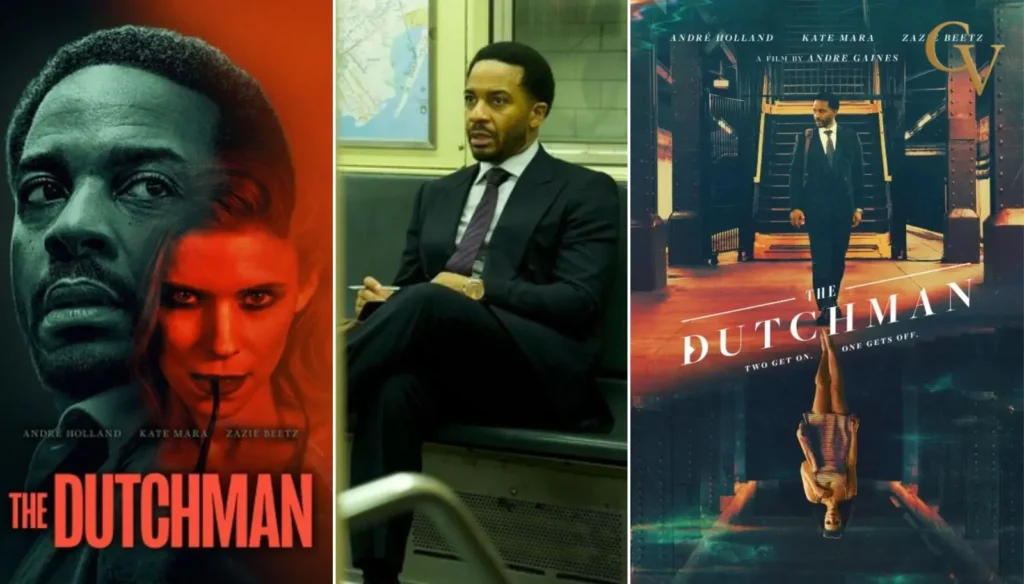
The Dutchman is not an easy film to watch—or to interpret. Directed by Andre Gaines, the movie modernizes Amiri Baraka’s provocative 1964 play and expands it into a haunting, psychological journey through modern Manhattan.
At its core, The Dutchman is less about what happens on screen and more about what it forces viewers to confront: identity, power, desire, and the quiet violence of psychological manipulation. In this review and explainer, GlobleVide breaks down what The Dutchman is really about—and why it’s generating intense discussion in 2026.
What Is The Dutchman About?
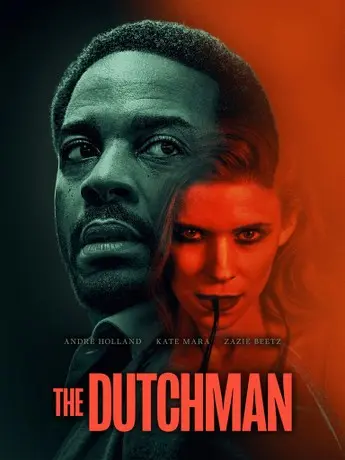
The film follows Clay, portrayed by André Holland, a successful Black businessman unraveling under the weight of personal and societal pressure. His marriage to Kaya is strained, his sense of self is fractured, and his emotional stability is already fragile.
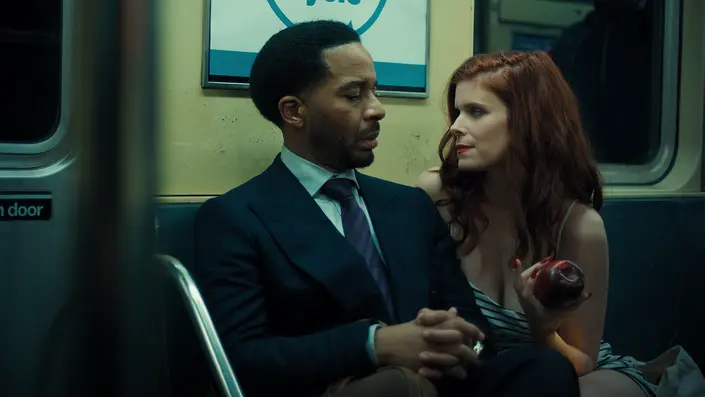
After a therapy session with the enigmatic Dr. Amiri, Clay encounters Lula, played by Kate Mara, on a subway ride. What begins as flirtation quickly turns into a psychologically aggressive exchange that spirals into a nightmarish confrontation.
The subway is only the beginning. The film expands into a surreal “dark night of the soul,” as Clay is forced to face both Lula’s provocations and his own suppressed fears.
A Modern Reimagining of a Provocative Play
From Stage to Screen—and Beyond
Baraka’s original play took place almost entirely on a subway car, creating an intense, claustrophobic confrontation. The 2026 film adaptation broadens that space into the city itself.
This expansion:
- Allows the story to explore Clay’s internal collapse more deeply
- Turns Manhattan into a psychological landscape
- Shifts the film from theatrical confrontation to cinematic fever dream
For some viewers, this ambition elevates the material. For others, it complicates it.
Identity, Power, and “Double Consciousness”
What the Film Is Really Exploring
One of the central themes of The Dutchman is double consciousness—the idea of living with an internal split between how one sees oneself and how society defines them.
The film examines:
- Racial identity in modern America
- Performance versus authenticity
- The emotional toll of constant self-surveillance
Lula functions less as a realistic character and more as a catalyst, relentlessly prodding Clay’s vulnerabilities.
The Psychological Game Between Clay and Lula
Seduction as a Weapon
Lula’s behavior is deliberately unsettling. She oscillates between charm and cruelty, intimacy and threat.
Her role in the film represents:
- Manipulative power dynamics
- Fetishization and objectification
- The erosion of psychological boundaries
Kate Mara’s performance has been widely described as unnerving, while André Holland’s portrayal of Clay is praised for its quiet intensity and restraint.
Grief, Guilt, and Emotional Disintegration
A Man Already Breaking
Clay’s encounter with Lula doesn’t create his crisis—it exposes it.
The film reveals:
- Guilt over his marriage
- Fear of inadequacy
- Suppressed anger and shame
As reality blurs into hallucination, Clay’s internal conflict becomes impossible to ignore.
Style, Symbolism, and Uneasy Atmosphere
A Film That Wants to Trap You
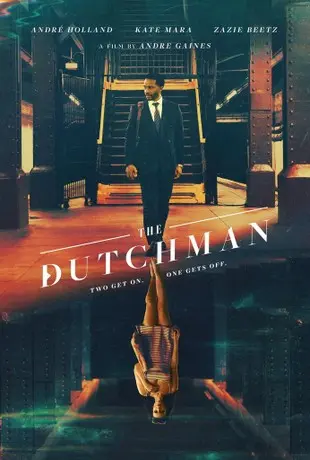
Visually, The Dutchman is steeped in shadow, reflections, and confinement.
Critics have noted:
- Claustrophobic lighting
- Repeating visual motifs
- Meta-textual moments, including a reference to the 1967 film adaptation
The result is a film that feels deliberately uncomfortable—mirroring its themes.
Why The Dutchman Divides Critics
Ambition vs. Execution
Critical response has been mixed but engaged.
Common points of agreement:
- André Holland delivers a mesmerizing performance
- Kate Mara’s Lula is deeply unsettling
- The themes are bold and relevant
Common criticisms:
- The expanded narrative sometimes drags
- The middle section can feel unfocused
- The 88-minute runtime feels longer than it is
Despite this, most critics agree the film is intellectually provocative.
Why The Dutchman Matters in 2026
A Film About Identity in a Fractured Moment
In 2026, conversations around race, power, masculinity, and psychological health remain deeply relevant.
At GlobleVide, we see The Dutchman as a film that:
- Refuses easy answers
- Challenges viewers rather than comforting them
- Reflects the anxiety and tension of modern identity
It’s not designed to entertain casually—it’s meant to unsettle.
How the Film Fits Today’s Cultural Landscape
The resurgence of psychologically driven films suggests audiences are seeking stories that explore:
- Inner conflict
- Moral ambiguity
- Emotional discomfort
The Dutchman fits squarely into this movement.
Related Reads on GlobleVide
- What Is We Bury the Dead Really About? A Review and Explanation of Its Meaning
- What Is Meandering Scars Really About? A Review and Explanation of Its Themes
- How Americans Are Reducing Stress Without Medication in 2026
These stories explore trauma, identity, and emotional resilience through different lenses.
Final Takeaway
The Dutchman is not a film that aims to please—it aims to provoke.
By transforming a classic play into a modern psychological thriller, it confronts viewers with uncomfortable questions about identity, desire, and control. Whether or not it fully succeeds, it leaves a lasting impression.
At GlobleVide, we see The Dutchman as a bold, imperfect, but necessary film—one that reflects the psychological tension of our time and invites audiences to sit with discomfort rather than escape it.
Faqs


7 For All Mankind Fall 2026: Nicola Brognano’s Y2K Denim Debut Is a Statement
7 For All Mankind has been synonymous with denim since the early 2000s, but its…
Can “Office Air” Really Wreck Your Skin and Hair by Lunchtime?
Yes, partly. Dermatologists say the low humidity common in air-conditioned and centrally heated offices can…

Most Weight Loss Drugs Help You Shed Pounds — But Not Improve Quality of Life, Major Study Finds
A large new analysis in The BMJ compared 19 weight-loss drugs across nearly 100,000 patients…

Paramount Faces a Drawn-Out Battle With State AGs Over the Warner Bros. Discovery Merger: ‘They Saw the Writing on the Wall’
Paramount Skydance has agreed to delay closing its $111 billion merger with Warner Bros. Discovery…

10 Easy Chicken Recipes Under $15 for Busy Weeknights (2026)
Tested in a real kitchen. Priced against actual 2026 grocery data. Every recipe feeds 4…
What Americans Are Eating for Breakfast in 2026 (High Protein Breakfast Trends)
In This article we use research, the real data, and the honest truth about how…
I don’t even know how I finished up here, however I believed this publish used to be great. I do not recognize who you are but definitely you are going to a well-known blogger in the event you are not already 😉 Cheers!